Google Analytics 4 automatically tracks file downloads for you. When a user clicks a link to a supported file type, GA4 records a file_download event, as long as Enhanced Measurement is active in your settings.
In this guide, I’ll show you how to verify this feature is turned on and exactly where to find the data, so you can see which resources people are downloading on your site.
Why Track File Downloads in Google Analytics
Tracking file downloads shows you which resources your visitors actually use. It helps you decide whether your PDFs, eBooks, or templates are worth keeping, improving, or promoting.
In my experience, I’ve seen a single PDF download from a key blog post generate more qualified leads than thousands of pageviews. Download data also helps you understand user intent. If someone downloads a pricing sheet, they’re usually much closer to making a decision.
Note: This guide covers tracking direct clicks on file links. If you place your files behind a WPForms submission form to collect leads, you’ll want to track the form submission as your main conversion goal instead.
How to Track File Downloads with GA4’s Built-in Features
GA4 tracks file downloads automatically when Enhanced Measurement is turned on and the file type is supported. When someone clicks a download link, GA4 fires a file_download event so you can see which files people access.
1. Understand How GA4 Detects File Downloads
GA4 tracks downloads when a link points to a supported file type like PDFs, documents, archives, or media files. It identifies the file by its URL extension and fires a file_download event when someone clicks the link.
| File Type | Example | Tracked by Default |
|---|---|---|
| brochure.pdf | ✅ | |
| DOCX | report.docx | ✅ |
| ZIP | assets.zip | ✅ |
| EXE | installer.exe | ✅ |
| Custom extensions | anything not on Google’s list | ✅ Requires a quick settings update |
Direct file URLs work best because GA4 detects downloads by checking the end of the link.
2. Enable Enhanced Measurement for File Downloads
GA4 only tracks file downloads when Enhanced Measurement is turned on. Many sites already have it enabled, but it’s important to check so you know downloads are being recorded.
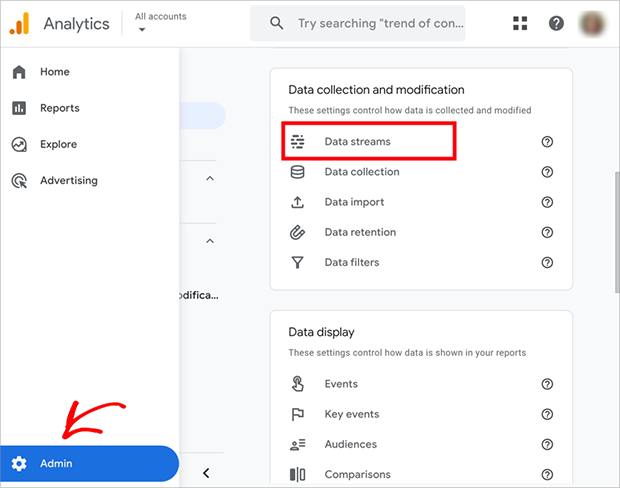
To enable Enhanced Measurement, go to Admin » Data Streams. Select your Web data stream.
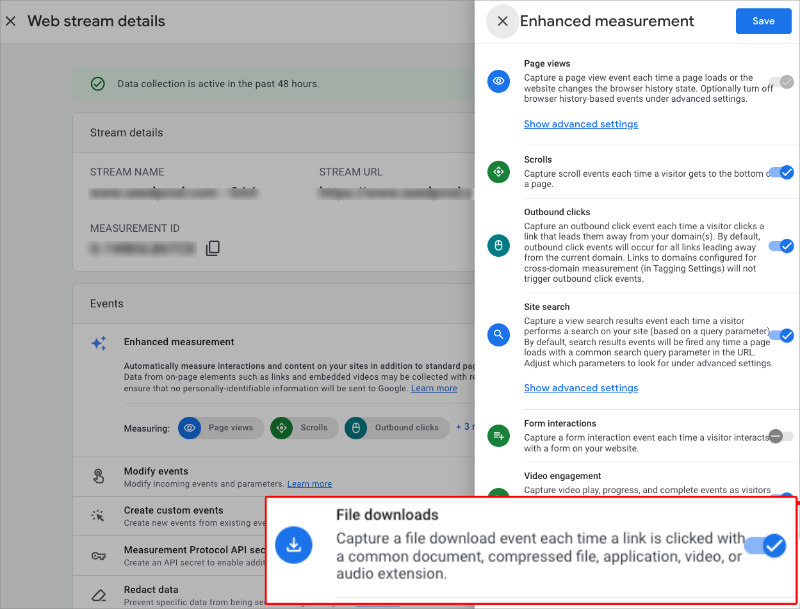
Turn Enhanced Measurement ON. Then click the gear icon and check that File downloads is enabled.
3. Check Download Events in GA4 Reports
You can confirm that GA4 is tracking your file downloads by checking the Events report. This shows each file_download event and the details GA4 collected.
To verify your data, go to Reports » Engagement » Events and look for file_download. Click it to see event details like file_name and link_url.
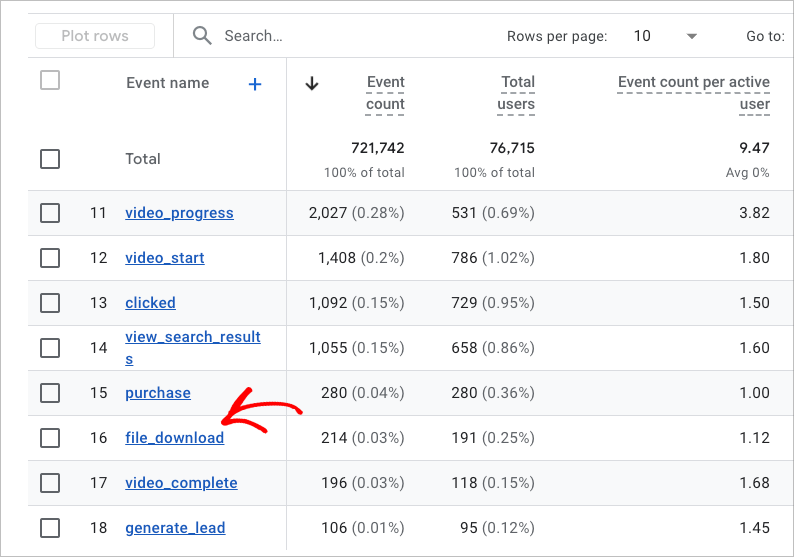
You can also test this in Realtime or DebugView. Open your site, click a downloadable file, and check that the file_download event appears in GA4.
How to Track File Downloads with OnePageGA (The Easy Way)

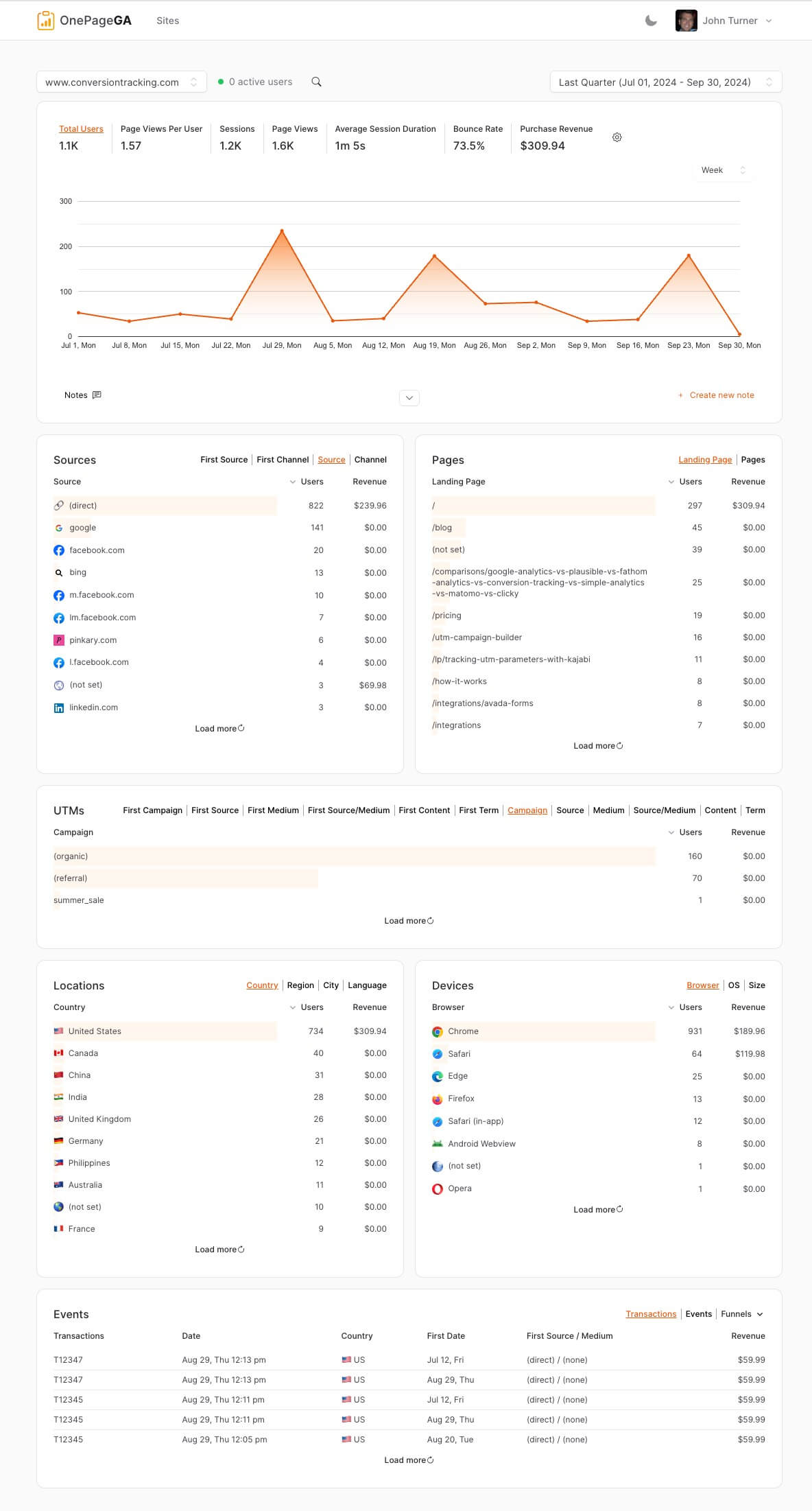
OnePageGA is a simplified Google Analytics reporting tool that connects to your GA4 property to display key metrics, including file downloads, on a single dashboard. It saves you from having to dig through GA4’s menus or build custom reports just to see your most important data.
1. Connect Your GA4 Property
Connecting OnePageGA to your GA4 account takes less than two minutes. You sign in, choose your property, and your report loads without any setup or configuration.
To get started, go to OnePageGA.com and sign in with your Google account. Select your GA4 property from the list.
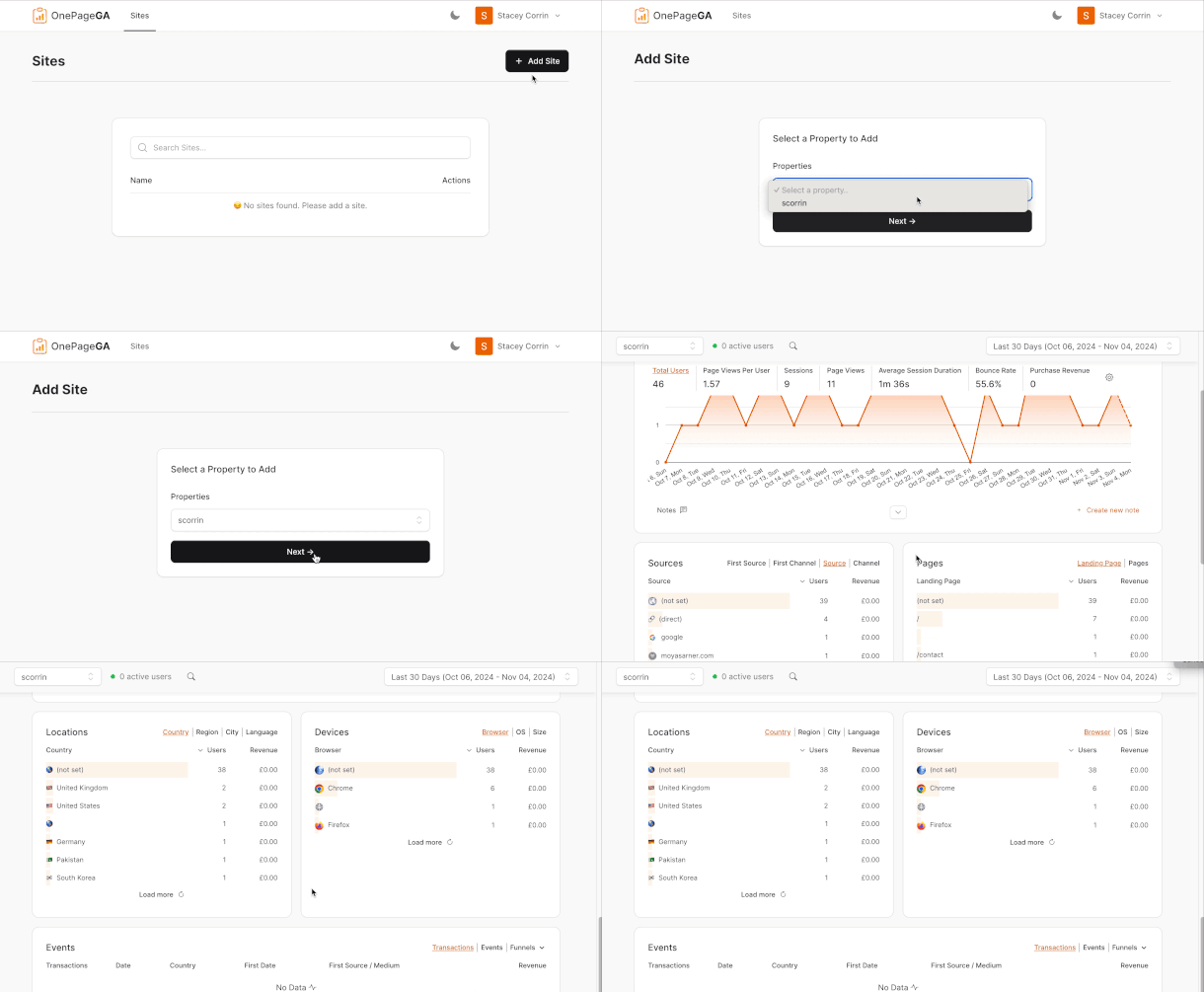
Your one-page report appears as soon as the connection is complete.
2. View File Download Data Instantly
Once the report loads, you’ll see your file download data in the Events section. OnePageGA shows the total number of file_download events in a simple, easy-to-read card.
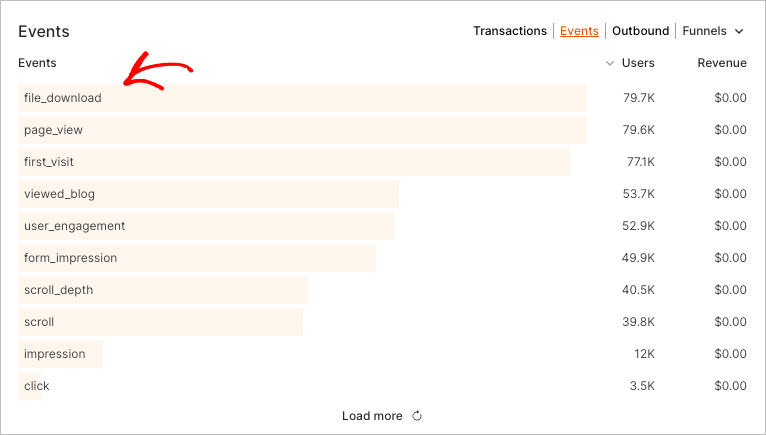
You can view this alongside your traffic, engagement, and conversions, which makes it easier to understand how downloads fit into your overall performance.
Why OnePageGA Simplifies GA4 Reporting
GA4 gives you a lot of data, but finding simple answers takes time. OnePageGA reduces that effort by showing your key metrics, including file downloads, on a single page. You get a clear snapshot without switching between reports or building custom explorations.
| Feature | GA4 | OnePageGA |
|---|---|---|
| Setup Time | 10–15 minutes | < 2 minutes |
| File Download Visibility | Buried under Events | Instantly visible |
| Setup Required | Yes | No |
| Ideal For | Data analysts | Small business owners |
From my perspective, having all the data in one place allows me to spot trends in file downloads, traffic, and engagement without having to build custom reports in GA4.
FAQs About Tracking File Downloads
What are file downloads in GA4?
File downloads are clicks on links that point to supported file types like PDFs, documents, media files, and archives. GA4 records these clicks as file_download events.
Why can’t I see file downloads in GA4?
You may not see file downloads if Enhanced Measurement is turned off or if the file type isn’t supported. You can check this by going to Admin » Data Streams, selecting your web stream, and reviewing the Enhanced Measurement settings.
Can I track different file types separately in GA4?
Yes. GA4 captures details like file_name, file_extension, and link_url, so you can review each file type in your Events report. For custom or uncommon file types, you just need to add the file extension to your “File downloads” settings in Enhanced Measurement—no custom coding needed!
How long does it take for file download data to appear?
GA4 usually shows download events within a few minutes. You can confirm activity faster by checking Realtime or DebugView.
Do I need custom tagging to track downloads?
Most sites don’t. GA4 tracks common file types automatically. You only need a custom event if your files use non-standard extensions.
GA4 does a great job tracking file downloads automatically, but its reports can be confusing. For most users, I recommend starting with GA4’s built-in tracking to understand which resources your visitors use. If you find yourself getting lost in the menus, then a streamlined tool like OnePageGA is the logical next step.
You may also find the following GA4 guides helpful:
- How to Increase Organic Search Traffic to Your Website
- Engagement Rate vs. Bounce Rate in GA4
- How to Add Annotations in Google Analytics 4
- How to Track Website Visitors The Easy Way
If you have questions or want to join the conversation, you can also find us on X and Facebook.